NEW: THE BACK TO SCHOOL EXPERIENCE IS HERE. New year. Fresh start.



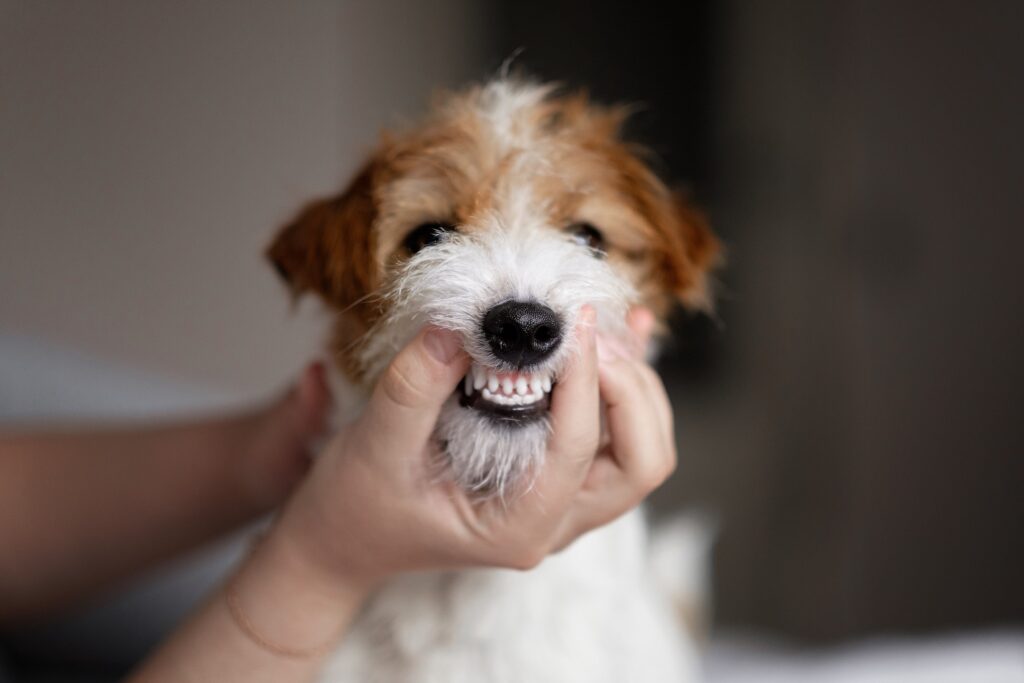
Your pet’s mouth matters more than most people realize. Dental hygiene is one of the most overlooked parts of pet health.
And honestly, we get it.
It’s not exactly easy to explain to a dog why a toothbrush is suddenly entering the daily routine. Cats, meanwhile, often respond to dental care efforts like tiny offended aristocrats who cannot believe you’ve disrupted their evening.
Some lucky pet parents have dogs or cats who sit patiently and allow their teeth to be brushed.
Most do not. Not at all, in fact. We get it.
Most pet parents are trying their best with a squirming puppy, a suspicious cat, or a dog who preemptively leaves the room the second dental care appears.
Still, oral health matters enormously. Not just for fresh breath, but for your pet’s overall health, comfort, and quality of life.
At Palms & Paws, we believe a healthy mouth is part of a healthy, happy life.
Why Dental Health Matters So Much
A pet’s mouth is one of the most important sensory areas in their body. Dogs and cats explore the world through scent, taste, chewing, carrying, grooming, and play.
When the mouth is painful or unhealthy, it affects far more than breath.
According to the American Veterinary Medical Association (AVMA), dental disease is one of the most common health conditions seen in dogs and cats. By age three, most dogs and cats already show signs of periodontal disease.
And because pets are incredibly stoic, many continue eating and behaving relatively normally even while experiencing significant discomfort.
That’s why paying attention matters.
Bad breath is not just “dog breath.” It can be an early indicator of tartar buildup, gum disease, infection, or other underlying health concerns.
The Reality of Brushing Your Pet’s Teeth
Let’s be honest.
Daily tooth brushing is considered the gold standard for preventing dental disease. Veterinary organizations including the AVMA recommend regular brushing as the most effective home-care method for reducing plaque buildup.
But real life exists.
Some pets tolerate brushing beautifully. Others react as though you’ve personally betrayed them.
The good news is that dental care does not have to be all-or-nothing. Even small, consistent efforts can make a meaningful difference over time.
The goal is progress, not perfection.
You are not alone! Remember, your veterinarian is a key partner in helping your pets sustain mouth health throughout their entire lives. When in doubt, ask your vet. What follows are a few at-home dental care options… but, as always, you (as the pet parent) and your vet (as your pet’s primary care physician) will know collectively what is the best solution for your pet family.
Dental Chews: Helpful, With a Few Caveats
Dental chews can be a useful addition to your pet’s dental routine, especially for dogs.
Many work by mechanically reducing plaque and tartar as the pet chews. Some also include enzymes or ingredients designed to support oral health. Products approved by the Veterinary Oral Health Council (VOHC) have undergone testing to demonstrate effectiveness in reducing plaque and/or tartar.
Pros of Dental Chews
- can help reduce plaque and tartar buildup
- provide enrichment and chewing satisfaction
- easier for many pet parents than brushing
- some products carry VOHC approval
Cons of Dental Chews
- not a replacement for professional dental care
- some products are high in calories
- hard chews can risk tooth fractures in aggressive chewers
- some pets swallow large pieces too quickly
As always, size and supervision matter.
And remember: the presence of chewing alone does not automatically make something “good for teeth.” Look for products with veterinary support and preferably VOHC acceptance.
Dental Wipes: A Practical Option for Some Pets
Dental wipes can be a surprisingly helpful option, particularly for pets who refuse toothbrushes.
Instead of brushing, a dental wipe is gently rubbed along the teeth and gum line in order to remove soft plaque buildup.
Pros of Dental Wipes
- often easier to introduce than toothbrushes
- less intimidating for sensitive pets
- helpful for maintenance between professional cleanings
Cons of Dental Wipes
- generally less effective than brushing
- may not reach all tooth surfaces well
- some pets still strongly object
For many households, wipes become a “better than nothing” solution that actually gets used consistently, which matters.
An Easy Option We Really Love: Oxyfresh
This is one of those products we genuinely get excited about recommending because it solves a real-world problem in a very simple way.
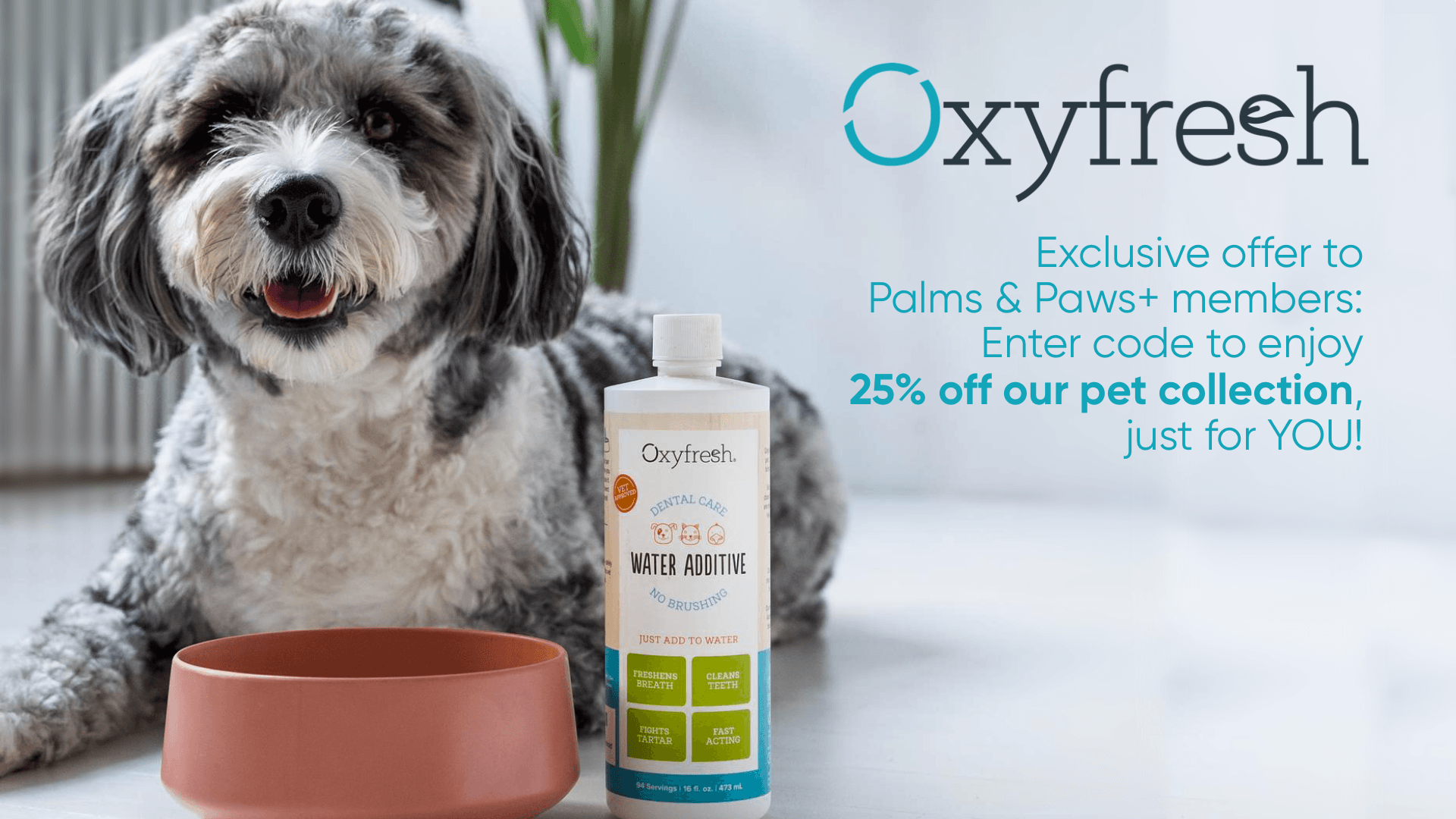
Our friends at Oxyfresh created a water additive that supports fresher breath and oral hygiene without requiring brushing, chewing, or wrestling your cat into a towel burrito.
You simply add it to your pet’s water bowl.
That’s it.
Their Dental Care Solution is designed to help reduce bad breath-causing bacteria while supporting overall oral health. It is odorless, tasteless, and easy for many pets to tolerate. For busy households or pets who strongly resist traditional dental care, this can be an incredibly helpful addition to a dental routine.
And because we love this product so much, Oxyfresh is offering Palms & Paws 25% off their entire pet collection. This is NOT a paid ad, by the way. Just a genuine partnership (or brand crush) between two aligned companies. Pretty cool, right?
👉 Be sure to grab your 25% offer here
Dental Tips for Puppies and Kittens
The best time to introduce dental care is early.
Young pets are naturally more adaptable, and gentle exposure helps normalize oral handling as they grow.
A few helpful tips:
- start slowly and keep sessions short
- use positive reinforcement and treats
- let them investigate toothbrushes and wipes first
- avoid forcing the process
The goal in the beginning is comfort and familiarity, not perfection.
Dental Tips for Adult Dogs and Cats
For adult pets, consistency becomes the focus.
Helpful habits include:
- regular veterinary dental evaluations
- daily or near-daily home care when possible
- VOHC-approved dental products
- monitoring for changes in breath, chewing, or appetite
Small, consistent efforts over time matter far more than occasional intense efforts.
Dental Tips for Senior Pets
Senior pets often need even more dental attention.
Dental disease can contribute to pain, inflammation, difficulty eating, and reduced quality of life. And because older pets tend to hide discomfort well, oral disease may go unnoticed until it becomes advanced.
Watch for changes or challenges with:
- worsening breath
- drooling
- dropping food while eating
- reluctance to chew
- facial sensitivity
- changes in appetite or mood
Partnering closely with your veterinarian during the senior years can make a tremendous difference in comfort and long-term health.
Partnering With Your Veterinarian Matters
Dental care is not cosmetic. It is medical care.
Your veterinarian plays an essential role in helping monitor your pet’s oral health throughout every life stage. Regular exams help identify concerns early, before discomfort and disease become more serious.
The goal is simple:
A clean, healthy mouth.
Comfort while eating and playing.
A better quality of life.
And honestly? That’s something every dog and cat deserves.
The Palms & Paws Perspective
We know dental care is not always easy.
But we also know something else:
The small, consistent things we do for our pets over time often become the biggest expressions of love.
A little patience.
A little persistence.
A little extra attention to the details that matter.
And your pets are so very lucky to have you. Thank you for being here to read all the way to the end. Now, that shows how much you care about your pets’ wellness and well-being.
That’s good pet parenting.